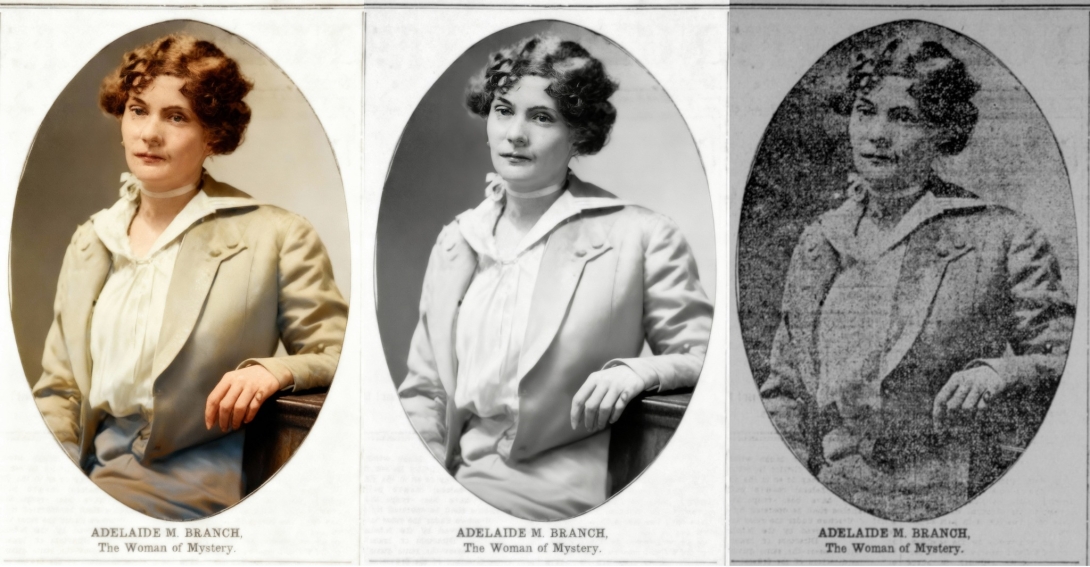
The Name Change: Adelaide M. Branch to Mary A. Douglas (1914–1948)
By Tom Rue
Adelaide Branch’s adoption of the pseudonym Mary A. Douglas in 1914 was a deliberate act of reinvention following the public scandal surrounding her relationship with Melvin Couch and her subsequent voluntary confinement in his law office. The name change coincided with her physical relocation -- first to Bermuda with the Sinclairs, then to Croton-on-Hudson, New York, and finally to Morningside Heights in the city, before settling in Washington, DC. She lived under this new identity for the rest of her life.
Unlike the sensationalized "hidden woman" narrative that defined her in the press, "Mary A. Douglas" allowed her to:
- Disassociate from her past: The name Adelaide Branch was inseparable from the 1913 scandal, which had been framed in newspapers as a moral failing rather than a story of exploitation or survival. By 1917, under the Douglas name, she published "What the World Owes to Spinsters", a sharp critique of marriage and gender roles—proof that she was actively shaping her own public persona rather than retreating into obscurity.
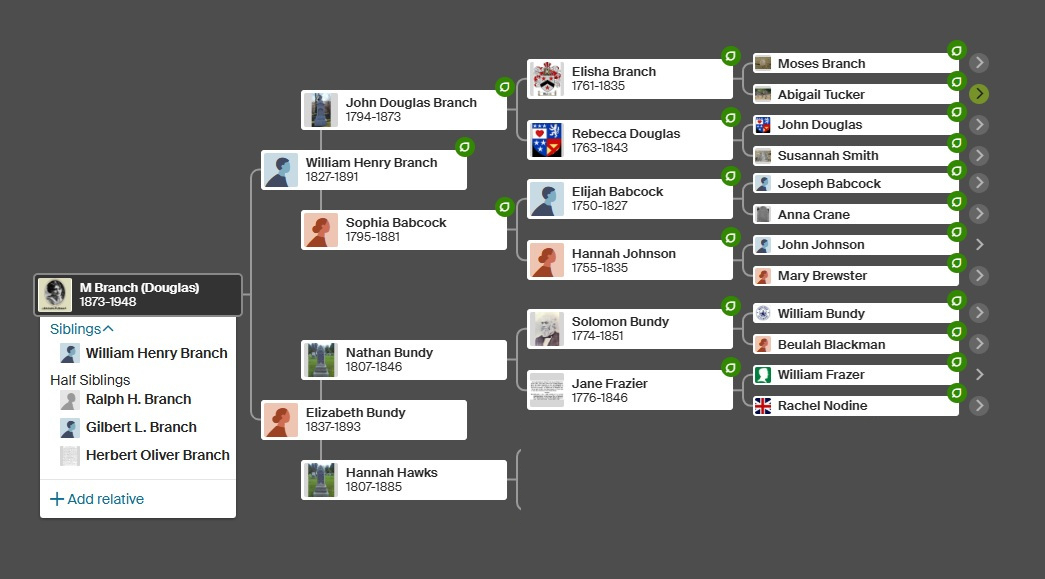
- Secure employment and social standing: As Mary Douglas, she worked as a stenographer, editor, and typist, roles that required a degree of professional respectability. The name may have been chosen for its neutral, Anglo-Saxon resonance, which would have been advantageous in early 20th-century white-collar workplaces. Given her documented English ancestry (including Mayflower descendants on her father's mother’s side), "Douglas" could have been a familial reference. Alternatively, it may simply have been a common surname that offered anonymity.
- Engage in intellectual and political circles: The Sinclairs, Warbasses, and other radicals knew her as Mary Douglas from 1914 onward, and it was under this name that she contributed to their networks. Her 1917 essay demonstrates that she was not a passive recipient of their aid but an active participant in the progressive debates of the era. The pseudonym allowed her to publish without the baggage of her past, a necessity in a culture that policed women’s reputations harshly.
The lack of surviving personal writings from Branch/Douglas means we cannot definitively explain the origin of "Douglas." However, the name’s practicality—its English roots, lack of immediate associations, or the fact that it was an ancestral name on her father's side (see below)—would have made it a natural and strategic choice for a woman seeking to rebuild her life.
The 1917 Essay: Proof of Her Intellectual Agency
The discovery that "What the World Owes to Spinsters" was written by Branch under the Mary A. Douglas pseudonym is critical. The essay’s satirical, feminist tone—mocking marriage as an "industry" and critiquing the economic and social constraints placed on unmarried women—reveals that she was:
- Not a victim but a critic: Far from internalizing the shame heaped upon her in 1913, she turned her experiences into a broader indictment of the systems that limited women’s autonomy.
- Engaged with radical thought: The essay’s themes align with the socialist-feminist critiques of contemporaries like Crystal Eastman and Charlotte Perkins Gilman, suggesting that Branch was not just a beneficiary of radical circles but a contributor to them.
- A working writer: Her ability to publish under the Douglas name proves that she continued to write and think publicly, despite the efforts of institutions (and the press) to reduce her to a scandal.
This essay challenges the historical erasure of working-class women’s voices. Branch was neither a suffragist leader nor a union organizer, but her writing demonstrates that feminist thought was not confined to elite circles. Her work is a rare surviving example of how unmarried, working women articulated their own critiques of gender and labor—without the mediation of male editors or reformist organizations.
Why This Story Matters Today
Adelaide Branch’s transformation into Mary A. Douglas is more than a historical footnote—it’s a case study in how women have navigated shame, labor, and intellectual life when institutional power was stacked against them. Her story resonates with modern audiences because it speaks to:
- The politics of reinvention: From survivors of abuse seeking anonymity to transgender individuals changing their names, Branch’s pseudonym highlights the ongoing struggle for self-determination in a culture that often defines people by their worst moments.
- Precarious labor and invisible work: Her later career as a freelance editor and typist—work that was often uncredited—mirrors the gig economy’s exploitation of women and marginalized workers today. How do we value the labor of those who operate outside formal recognition?
- The right to control one’s narrative: In an era of digital permanence, where scandals and personal histories can be endlessly resurfaced, Branch’s story asks: Who gets to decide when someone deserves a second chance? Her name change was not just about hiding—it was about reclaiming the right to define herself.
What We Know—and What We Still Need to Learn
While the Mary A. Douglas pseudonym allows us to track Branch’s post-1914 life, gaps remain:
- No surviving personal correspondence (beyond the Sinclairs’ and Warbasses’ letters) explains her specific choice of "Douglas."
- Her later writings, if they exist beyond the 1917 essay, have not been located in archives.
- The extent of her political collaborations with radicals like the Sinclairs or Dr. Marie Equi is fragmentary, known only through secondhand accounts.
Yet even with these limitations, her story challenges the way we remember women’s history. She was not a famous reformer, but her life exposes the quiet, determined resistance of those who refused to be defined by the roles assigned to them. In an era where women’s autonomy is still contested, her insistence on rewriting her own name—and her own story—is a legacy worth recovering.
Note added October 2026: Court and deed research since this post has settled the name question differently. Mary A. Douglas was an alias used for publishing and professional life; Adelaide M. Branch remained her legal and financial identity, and she executed a mortgage assignment as Adelaide M. Branch in January 1918. No name-change petition has been found, and none was legally required in New York — but the pattern of her signatures shows she kept the two names for two spheres.
Tags
- Log in to post comments