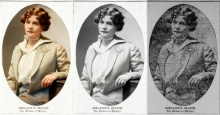
Biography: Adelaide Branch, Hidden Woman


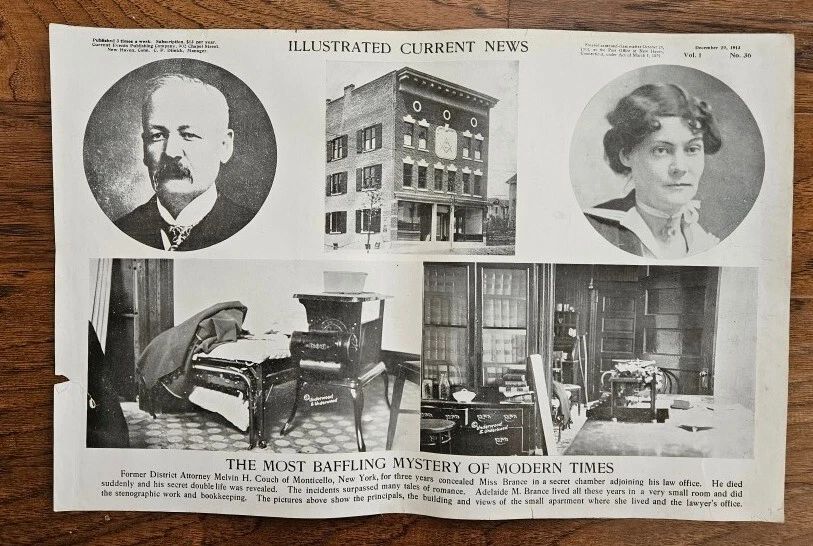
News banner, December 27, 1913

By Tom Rue

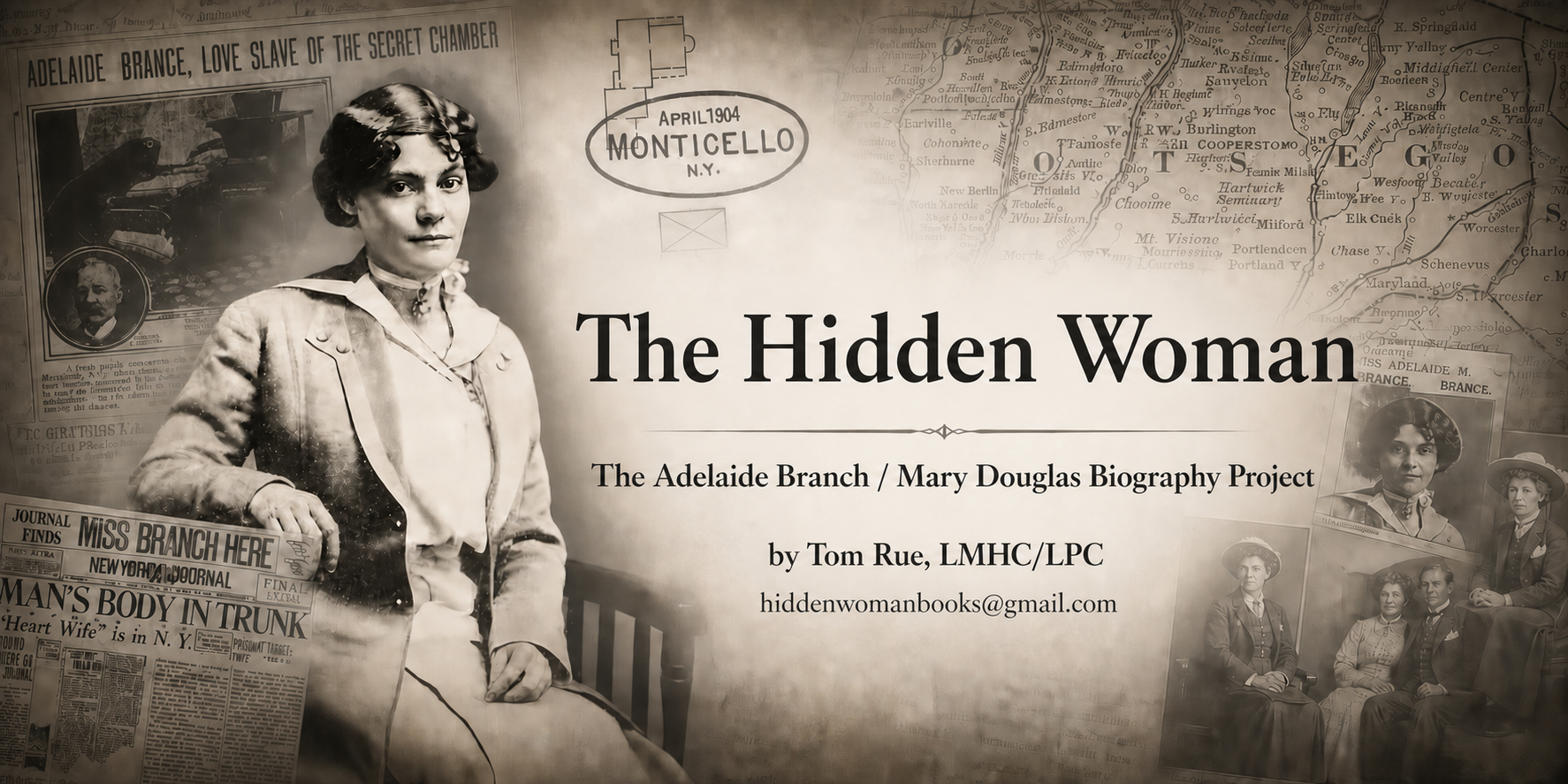
This is a story that has pulled at me for years — of Adelaide Mary Branch (1873–1948), a woman whose life unfolded at the edges of visibility, often at the mercy of narratives not her own. Born into a locally prominent family in Hartwick, Otsego County, NY, she turned away from expectations placed upon her -- of marriage, of inheritance, of respectable womanhood -- and sought to define herself on her own terms. Yet the price of this autonomy was steep. She died in 1948 under her adopted pseudonym of Mary Douglas, and was buried in an unmarked grave.

Watch this space for news on publication or email asking to be placed on our mailing list.

From Scandal Subject to Reform Network Dependent

Writings of Mary A. Douglas (formerly known as Adelaide M. Branch) that have been located, as well as a few that have not yet been, including:

  • Mary A. Douglas, "What the World Owes To Spinsters", The Forum, July 1917, pp. 99-113.

  • Mary A. Douglas, "The House of One Room", Book News Monthly, September 1916, pp. 99-113.

  • Adelaide M. Branch, two poems, The Evening World (New York), December 24, 1913, pp. 1-2.

Click "Read More" below.

Adelaide Branch Tells Her Own Story (1913)

On December 23, 1913, shortly after her lover's death, Adelaide Branch stood in the Sullivan County Jail and told a crowd of reporters her own story. What follows is transcribed from the Atlanta Georgian. Segments were quoted in newspapers around the country. This one appears to be a relatively complete transcript (though it ends abruptly, cut short in editing).

What's In A Name?

Adelaide Branch’s adoption in 1914 of the pseudonym Mary A. Douglas was a deliberate act of reinvention following the public scandal surrounding her relationship with Melvin Couch and her subsequent voluntary confinement in his law office. The name change coincided with her physical relocation—first to Bermuda with the Sinclairs, then to Croton-on-Hudson, New York, then Morningside Heights in the city, and finally Washington, DC. She lived under this new identity for the rest of her life. Unlike the sensationalized "hidden woman" narrative that defined her in the press, "Mary A. Douglas" allowed her to dissociate from her past, secure employment and social standing, and engage in intellectual and political dialogue.

Dorothy Dix's interview (1913)

One journalist of the day who was granted an interview by Adelaide Branch before she left Monticello was Dorothy Dix (nee Elizabeth Meriwether Gilmer), the first and most famous newspaper dispenser of advice to the lovelorn. Dix said a fair telling of the story of Adelaide Branch required a woman’s perspective. With an estimated audience of 60 million readers, Dorothy Dix was a columnist employed by William Randolph Hearst. At the time of her death, her obituary said she was the highest-paid and most widely read female journalist.

On Spinsters (Mary A. Douglas, 1917)

This essay by Mary A. Douglas is deeply informed by her own lived experience of "social death" and rebirth. After the 1913 scandal involving her residency in the office closet of her "heart husband" until his sudden death resulted in her exposure, her defense of the "spinster" (or the woman living outside traditional marriage) was effectively a manifesto for her own new life.

"A Life in the Margins," Tom Rue (2025)

In the turbulent shadows of America's Gilded Age and Progressive Era, one woman's life wove through the circles of literary giants, radical reformers, and hidden revolutionaries. The Hidden Woman brings to light the extraordinary yet overlooked journey of Adelaide M. Branch -- a "pretty book agent" turned resilient survivor, who crossed paths with Upton Sinclair, Dr. Marie Equi, Dr. James and Agnes Warbasse, Emma Goldman, and other luminaries of social change.

"Who was Adelaide Branch?," Tom Rue (2025)

Adelaide Mary Branch, later known as Mary Douglas, was born in 1873 into a respected Hartwick family, but refused the genteel life expected of her. After early loss and estrangement, she chose unconventional paths throughout her life -- guided by love and moral conviction rather than social conventions or others' approval. As a child, Addie was a devoted and loving daughter whose parents died before she was fully grown, one by suicide and one of cancer. As an adult, she maintained her caretaker, teacher, and healer core values. An Ohio newspaper quoted her, “As soon as we strip off this little fleshy veil, we are all love for every human soul.” ("Miss Branch Tells Her Story - Heart Mate of Monticello Lawyer Declares She Has No Regrets", Columbus Daily Statesman, December 27, 1913.) A forthcoming biography reconstructs a well-documented portrait of a woman of independent spirit and deep emotion, who defied the conventions of her era, abandoning a privileged lineage in Hartwick, Otsego County, New York, to live
Subscribe to

RSS Feed