
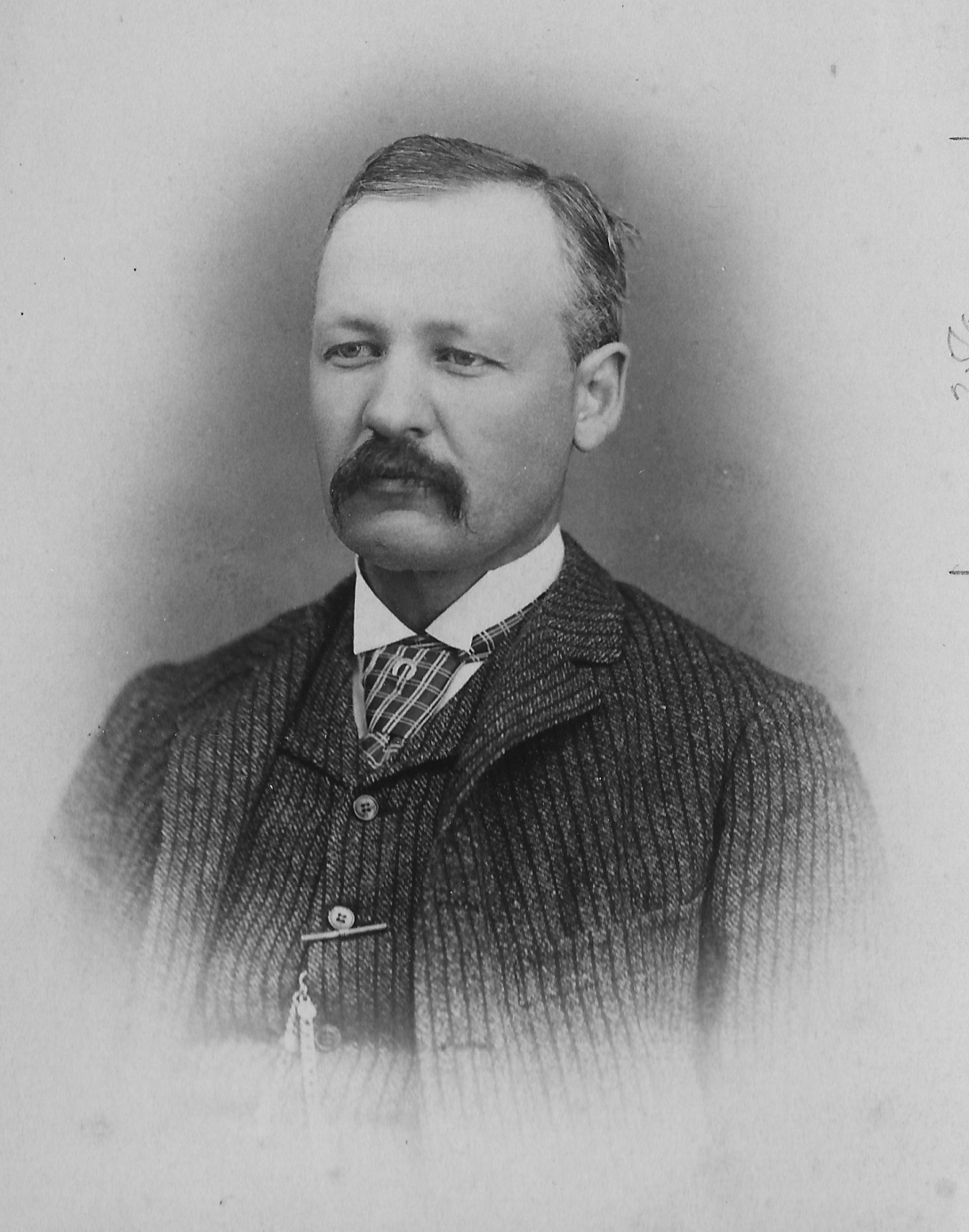
Reconstructing a Brother on the Mosaic Pavement
The Unvarnished Life and Legacy of Worshipful Brother Melvin H. Couch
A Historical Lecture at a Stated Communication of Sullivan Lodge No. 521, F&AM
by Wor. Thomas Rue, Lodge Historian
October 27, 2026
I. Meeting on the Level
Worshipful Master, Wardens, and Brethren of Sullivan Lodge No. 521 —
We gather tonight, as Masons gather, on a blue carpet we sometimes imagine as a mosaic pavement of black and white checks — a symbolic space that reminds us of the dualities of the human journey. Our degrees teach that no man is perfect; that the rough ashlar must be squared by the tools of virtue; that we must meet on the level and part on the square. The world outside this room is not always so careful. History has a way of flattening the complex, many-sided lives of our departed brethren into two-dimensional caricatures — and few men have been flattened worse than the brother of whom I speak tonight.
He sat in the East of Monticello Lodge No. 532. He walked the streets of this county as its chief prosecutor. And in the final fortnight of his life, he became the center of a national, sensationalized scandal that shook the Catskills at the close of 1913. I speak of Worshipful Brother Melvin H. Couch.
For more than a century, his name has been whispered in Sullivan County alongside the legend of the “hidden woman in the wall” — a tabloid caricature of a dirty, eccentric old lawyer who kept a love slave locked inside his Court Square office. But the primary-source archives, the court records, and the fraternal ledgers tell a vastly different story. They reveal a man of intense civic devotion, a dedicated Mason, and a severely injured, grieving father who found, in his final and painful years, a quiet sanctuary of mutual care.
Tonight, let us sweep away the yellow dust of the Gilded Age tabloids. Let us take up our working tools — the square of truth, the level of equality, and the plumb of rectitude — and reconstruct the true, unvarnished life of Brother Melvin H. Couch.
II. The Rising Advocate — Law, Order, and the Gavel
To understand Melvin Couch, go back with me to the early 1880s, when he was a rising country attorney in his early thirties, building his practice in the village of Monticello. In those days a country lawyer was more than an advocate. He was an essential civic broker, a personal confidant.
We can see the trust he had already earned in a document dated March 27, 1882 — the last will and testament of William Thompson of Forestburgh, proved before the Surrogate the following April. Thompson, a working-class pioneer who signed his will with a simple X, designated “my friend Melvin H. Couch” as his sole executor. A man who could not write his own name entrusted everything he had to this lawyer. It was a testament to Couch’s growing reputation as a trustworthy, accessible advocate for the common people of this county.
By June of 1883, Couch was advertising himself in the Republican Watchman as a lender in the heart of the community: “MELVIN H. COUCH, ATTORNEY AND COUNSELOR AT LAW — MONEY LOANED.” In a rural economy starved for institutional capital, he lent money and dealt in mortgages, putting local capital to work at home.
Hold on to that phrase — “my friend.” We will need it tonight, when we come to weigh what the newspapers later made of this man.
Local popularity translated into political success. In November 1886, Couch was elected District Attorney of Sullivan County. In November 1889 he was re-elected — two consecutive terms. He earned a reputation as a rigorous and economical prosecutor, and his most famous case was his conviction of the murderer Jack Allen — the last man hanged in the county.
But to understand what happened to Couch’s ambitions — and eventually to his privacy — we have to understand the courthouse square he worked in: a small legal world ruled by faction, where a conservative wing of his own Republican Party — the Thornton-McLaughlin-Mapledoram faction — stood ready to cross party lines to defeat its own.
Couch ran for Sullivan County Judge in 1893 and again in 1899, and both times he lost to the Democrat George H. Smith — the “boy lawyer” he openly despised. In 1893, the decisive blow was struck from within his own party, when the Thornton-McLaughlin-Mapledoram Republicans crossed party lines to elect Smith.
Thornton himself was too ill even to attend the convention, but his faction’s defection decided the day. The defeat wrecked Couch financially — he had poured borrowed money into the campaign — and, as a friend wrote, he never fully recovered from his defeat.
Couch learned a hard lesson in 1893: that in Monticello’s courthouse world a man could be beaten from inside his own party, by men he could not answer in the open. From that lesson he drew a conclusion that would shape the rest of his life. Secrecy and defensive walls became his primary armor.
Frustrated by these public defeats, Couch withdrew from the public eye. He spent more and more of his nights sleeping on a cot in his law office — a habit justified at the time by his leg, injured severely in his youth, being too painful for the long carriage journey up the hill to his residential home. Remember that office. And remember that cot.
III. The Crucible of Ashes — Fire and Fraternal Resilience
It was within the halls of Monticello Lodge No. 532 that Brother Couch found his true sanctuary. He was a deeply committed member of the Craft, serving alongside brethren like David S. Avery — his warm friend — and Jacob M. Maybee, a former district attorney who kept a flat in the Temple itself. But the true test of Couch’s fraternal devotion came in the late summer of 1909.
In August 1909, a catastrophic fire swept through the business district of Monticello. The flames devoured the Masonic Temple, built in 1898 — and with it Couch’s office, his library, and his files.
Couch met that fire already a crippled man. In his youth, a track accident — a chain strung across the street by his friends — had lamed his foot permanently, and tuberculosis was reported in the weakened joint. The fire of 1909 further aggravated that chronically infected leg, an affliction that would torment him for the remaining years of his life.
But the Masons of Monticello did not despair. Even as the ruins of their temple smoldered, they resolved to rebuild — and quickly. On Thursday, November 18, 1909, just three months after the fire, the lodge gathered to relay the cornerstone of the new Temple.
Melvin Couch watched this rise from the ashes with profound pride. But his personal life was about to be struck by an even greater tragedy.
In the summer of 1910, Couch’s only son, Stephen Barnum Couch, was working in Manhattan. On July 27, 1910, during a brutal eastern heatwave, twenty-six-year-old Stephen collapsed from heat prostration on a Manhattan street and died the same day. The sudden death of his beloved son shattered Melvin Couch. His grief was immense — and there is reason to believe the Couch marriage was hollowed by that parental grief.
The Temple rose again — its cornerstone relaid in 1909, the rebuilding completed in 1910 — and Couch returned to his work in an office within its walls. But he was a broken man: his leg a chronic torment, his only son in his grave, his ambitions for the bench twice defeated, physically spent and grieving the loss of his family’s future.
A father is not meant to bury his son. Everything that follows in this story happens in the shadow of that July day.
IV. Quiet Partnership — The Truth Behind Court Square
It was at this exact moment of physical and emotional collapse, in February 1911, that Adelaide Mary Branch moved into the back of Couch’s office to stay. She was no newcomer to the village: she first came to Monticello in the summer of 1898, and had entered Couch’s orbit in those late-1890s years.
The sensationalized yellow-press accounts of December 1913 would later claim that Adelaide was a helpless, uneducated love slave whom Couch had lured into a secret closet. But the forensic reconstruction of her life proves the exact opposite. Adelaide Branch was an educated, highly capable woman who actively chose to make a home and a workplace with Melvin Couch as an act of mutual survival. As a client, she trusted him. He was her vigorous legal advocate when she needed one.
Adelaide’s hold on her childhood home in Hartwick had crumbled. Under a quitclaim deed of 1901 she and her older half-brother Herbert were co-owners of the family homestead — yet tenants, Charles and Libbie Sheldon, were residing upon the land, and in February 1911 she was plausibly without a home of her own. She had earned her own living for a decade as a traveling book agent and schoolteacher. She was highly literate, trained in shorthand, and possessed a keen business mind.
When she moved into the private, partitioned suite in Couch’s law office on Court Square, she entered into not just an affair of the heart, but a structured, highly collaborative partnership.
As a typist and clerk: Adelaide performed clerical work in Couch’s office — she had taught herself shorthand, and learned to operate a typewriting machine.
As a caregiver: most importantly, she acted as his personal nurse. His chronically infected leg — lamed in his youth, aggravated in the fire — received the devoted wound care and companionship that came from “Addie’s loving hands” — the care that kept the aging attorney going.
As her trusted legal counsel: in April 1911, Couch, as Adelaide’s attorney, filed a Supreme Court partition suit on her behalf against her half-brother Herbert. The land question itself was settled by deed, not by decree: on April 24, 1911, Adelaide conveyed her undivided half-share of the Hartwick homestead to Charles Sheldon for $620, and on June 5, 1911, the partition action was discontinued by stipulation. Couch did not pocket her money. The mortgage records of Monticello show instruments taken and assigned in Adelaide’s own name — among them, in February 1913, a mortgage of $180 assigned to her and a second mortgage of $120 executed directly to her — her capital held in her name, to secure her independence.
For nearly three years, this hidden room was not a prison but a sanctuary of quiet dignity. Inside were a cot, a plain pine table, two oak chairs, an oil stove set on a soap box, where she cooked their meals, and an improvised box closet — and the safety she had lacked since her parents’ deaths in the 1890s. Outside, Couch continued to represent his clients in the courthouse across the square.
But why a partition? Why the windowless room — the wooden board partition that stopped short of the ceiling (one newspaper measured the gap at a foot; another, at two feet) — creating the cubbyhole where Adelaide spent three years? Here I want to be plain with you, Brethren: some of what follows is documented in the record, and some of it is my reconstruction from that record. Judge for yourselves where the line falls.
The answer lies in the factional courthouse world we have already traced. Couch had operated for thirty years among men who had twice beaten him — once by crossing his own party’s lines — and left him financially wrecked. In that environment, any moral vulnerability, if exposed, would have been instantly weaponized by his entrenched enemies. To preserve his standing as a former District Attorney and judicial aspirant, he chose the absolute physical concealment of his domestic life.
Consider the policing of private life he had already witnessed. In 1896, a quarrel in Monticello’s Presbyterian church aired the charge that Couch — though not even a church member — had signed saloon liquor licenses while he was district attorney. Private conduct, in that world, was public ammunition. And Janette — Janette Potts Couch — was the sister of Jeffersonville’s Judge Potts; she had her own standing, and a family’s respectability, to preserve.
In this world, even silence had accomplices. In one respect the arrangement was an open secret — and those who knew chose the partitioned lie over the disruptive moral truth, to preserve municipal and legal respectability.
Only one person tried to break the silence. Annie W. Crandall Maybee — widow of former District Attorney Jacob M. Maybee — told the Sun that some five years earlier, about 1908, she had caught the pair in the old Temple, and had seen Couch lock the woman in. She appealed to the officers of the Masonic lodge and to its chaplain. The chaplain’s response was passive and deterministic: the Lord would right things in good time. It was, in effect, a theology of inaction. Her late husband had remonstrated with Couch directly — and been told that Mrs. Couch knew all about it. The silence held.
This is the context in which we must judge what happened behind that partition. Not a crime story. A sanctuary — defended by silence, sustained by mutual care, for nearly three years.
V. Death, the Press Storm, and the Record
The arrangement came to a sudden, tragic end shortly before Christmas. On December 21, 1913, Melvin Couch, at the age of sixty-five, suffered a sudden rupture of the ascending arch of the aorta inside his office. He died quietly, resting in Adelaide’s arms.
Terrified and suddenly entirely alone, Adelaide ran out, shortly after six o’clock that morning, to summon a physician — Dr. Curlette. The discovery of the partitioned office suite triggered an immediate national media storm. The sensational press seized upon the story, and the “love slave” myth was born. Adelaide was committed to the Sullivan County Jail on a charge of petit larceny — a charge the village justice later dismissed for insufficient evidence — and, having nowhere to go, she remained a willing inmate of the jail’s hospital ward, under sedation with opiates and on suicide watch. In time the progressive author Upton Sinclair intervened on her behalf, and in 1914 she was removed to Bermuda. There she began rebuilding her life as the writer Mary Douglas — though Bermuda was a chapter, not the end: she returned to New York, where she lived until her death in 1948.
What the tabloids did not report was the state of the estate they had feasted on. When Melvin H. Couch died, his estate was severely insolvent: debts were proved at $3,587.49 against personal property insufficient to pay them. On January 25, 1915, on his widow Janette’s accounting as administratrix, the Surrogate’s Court decreed the sale of the Couch home lot at Main and Spring Streets, her dower right sold with the property. He left behind no material wealth — but a complex, deeply human legacy.
According to the New York Times, no Masonic funeral was held for Melvin Couch, possibly because his widow did not request it. The next day Janette Couch told a New York Evening World reporter that, for her, the affair was finished: "So far as Mrs. Couch is concerned the affair is as a closed book. When during yesterday's blizzard the sods on Couch's grave were smoothed down the crippled lawyer's memory became a dead letter with her."
One word, Brethren, about the record itself — for this lodge is part of it. In researching the book from which this lecture is drawn, I wrote to the Grand Lodge of New York to ask permission to quote Monticello Lodge No. 532’s minutes of December 26, 1913 — the lodge’s own account of those days (which I had viewed years ago). Assistant Grand Secretary Richard W. Bateman declined, citing Section 798 of the Masonic Law: the proceedings of a lodge are sub rosa. That is the rule of the Craft, and it stands. But the refusal is itself a part of this history, and so it is documented — in a footnote in the book.
VI. Laying Down the Working Tools
Brethren, we are taught to judge a man not by the sensationalized gossip of the profane world, but by the square of his actions and the charity of his heart. Melvin Couch was a man who suffered profound public defeats, intense physical agony, and the ultimate grief of burying his only son. In his hour of darkness he did not turn to bitterness. Instead, he built a sanctuary of mutual care with a brilliant, marginalized woman, protecting her financial future even as his own body decayed.
Tonight, as the successor lodge of this county’s Masonic tradition, I lay before you a resolution for your consideration — the acceptance by this lodge upon a brother long misjudged by the world:
I propose that we sweep away the yellow dust of the Gilded Age tabloids; that we meet Brother Melvin H. Couch on the level of truth and part on the square of justice; and that we declare his memory restored as an able advocate, a dedicated public servant, a resilient builder of this temple, and a devoted father.
Tonight, let us lay down our gavel of judgment. Let us remember Worshipful Brother Melvin Couch as he was: an able advocate, a builder of our historic temple, a devoted father, and a brother who, having laid down his working tools, worthy of our quiet, respectful remembrance on the mosaic pavement.
Thank you, Brethren.
Source Notes for This Lecture
Couch’s early career and the “MONEY LOANED” advertisements: Republican Watchman, June 1883; will of William Thompson of Forestburgh, dated March 27, 1882, proved April 16, 1883 (Couch named sole executor).
District Attorney service — first elected November 1886, re-elected November 1889 — and the conviction of Jack Allen: Hidden Woman, ch. V; Republican Watchman, December 26, 1913.
The Thornton-McLaughlin-Mapledoram faction and the county-judge defeats of 1893 and 1899: Hidden Woman, ch. V.
The 1893 defeat — Thornton too ill to attend the convention, the faction crossing party lines, the borrowed-money campaign, “he never fully recovered”: Hidden Woman, ch. V.
The 1909 fire and the chronically infected leg (youth track injury, aggravated in the fire): Hidden Woman; contemporary press accounts conflict on the injury’s cause, and the carbide account is not supported.
The cornerstone relaying, November 18, 1909, and the rebuilding of the Temple, 1909–10: Republican Watchman, November 1909; Benton’s 1942 history of Monticello Lodge No. 532.
The death of Stephen B. Couch, July 27, 1910: New York City Death Index, certificate no. 23378; New York Tribune, July 28, 1910.
Adelaide’s first coming to Monticello, summer 1898; her move into the partitioned room, February 1911; her three roles; the 1911 partition action (Case No. 299) and her deed to Charles Sheldon, April 24, 1911 ($620; action discontinued June 5, 1911); the mortgages in the name of Adelaide M. Branch.
The 1896 Presbyterian quarrel (the liquor-license charge), the open secret, Mrs. Maybee’s account and her appeal to the lodge officers and chaplain: The Sun, December 1913; Scriber, “The Melvin H. Couch Scandal, December 1913.”
The death of December 1913, the press storm, the petit-larceny commitment and her willing stay under sedation with opiates, Sinclair’s intervention and the Bermuda removal: New York Times, December 23–24, 1913; Sullivan County jail register, entry no. 159; New York Tribune, January 7, 1914; Sinclair’s account in The Brass Check.
The insolvent estate — debts proved at $3,587.49; the January 25, 1915 decree ordering sale of the Main and Spring Streets lot: Sullivan County Surrogate’s Court records (Minute Record 13, p. 469).
The Grand Lodge correspondence: Richard W. Bateman, Grand Pursuivant & Assistant Grand Secretary, to Thomas S. Rue, email, September 28, 2026, denying permission to quote the December 26, 1913 minutes of Monticello Lodge No. 532 (Section 798); the denial is documented in a footnote in Hidden Woman.
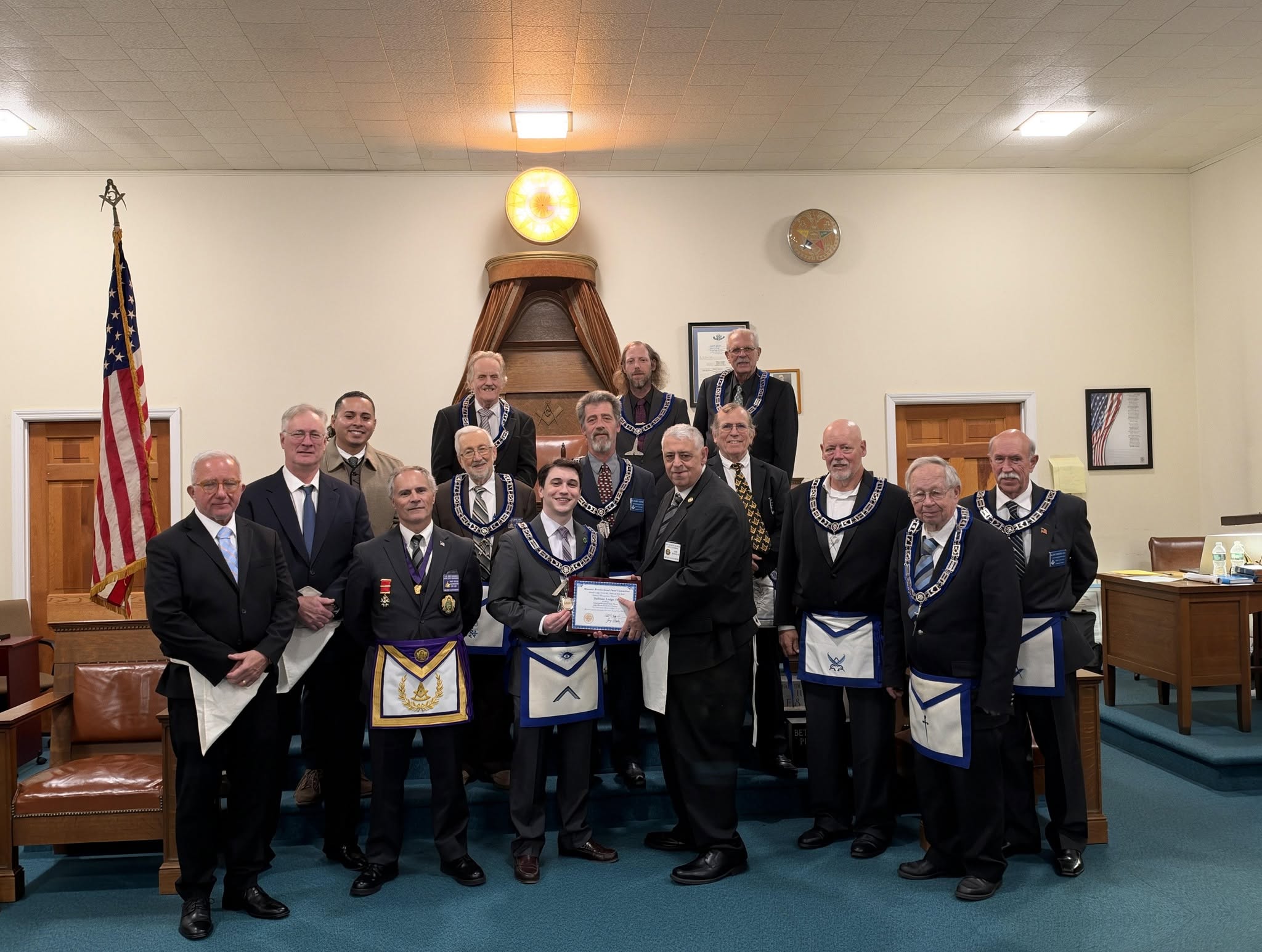
October 27, 2026 at Sullivan Lodge #521, Liberty, New York
Tags
- Log in to post comments